How to Create Pinterest Pins With AI: Workflow Guide

By
Alexander Gran
Founder & Editor
Pinterest works as a long-tail discovery engine, not a viral social platform. Pins can drive traffic months after publication. The challenge for small teams is volume: Pinterest rewards consistent publishing across multiple pin variations per piece of content, and manually designing and writing copy for dozens of pins per week is not sustainable for a team with other work to do.
AI can reduce the labor involved without removing the human judgment required to make pins actually worth clicking. This guide covers a practical workflow — not a promise of algorithmic virality.
What AI Can and Cannot Do for Pinterest
AI is useful for: generating multiple pin angles from a single source, drafting and refining headline copy, creating image briefs or prompts for design tools, batch-producing pin variations to test, and identifying questions your audience is likely searching for.
AI cannot reliably: produce images that perfectly match your brand without refinement, guarantee what will be saved or clicked, predict Pinterest algorithm behavior, or replace the judgment call about whether an angle is actually useful to your audience.
The Workflow
Step 1: Select One Source Asset
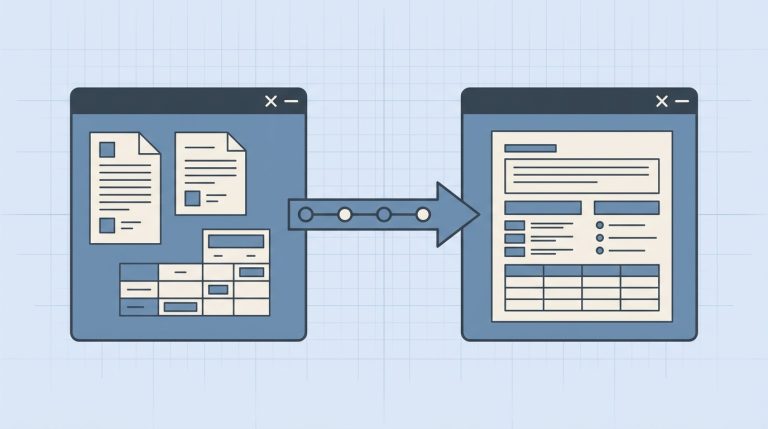
A blog post, product page, lead magnet, tutorial, or offer. Extract the core elements: the promise (what someone gets), the audience (who it helps), the pain point (what problem it solves), and the desired click action (what you want them to do after seeing the pin).
Step 2: Generate Pin Angles With AI
Ask an AI assistant to generate multiple angles for the same content. Each angle frames the same underlying value differently. Useful angle types include:
- How-to or tutorial format
- Checklist or list format
- Mistake or “what not to do”
- Comparison or “X vs Y”
- Benefit-led (“Get X result by doing Y”)
- Curiosity-led (“Why most people get X wrong”)
Sample prompt: “I have a blog post about [topic] for [audience]. Generate 8 Pinterest pin concepts, each using a different angle: how-to, mistake, checklist, comparison, benefit, question, curiosity, and before/after.”
Step 3: Write Overlay Copy
Pinterest text overlays should be short, specific, and clear. Aim for under eight words on the main headline. Avoid vague phrasing (“Game-changing tips you need to know”) and aim for specific value (“5 email templates that get replies in under 24 hours”). Ask your AI assistant to generate five variations per angle, then edit the best one for tone and accuracy.
Step 4: Create Visual Variants
Use an AI image tool or a design tool with AI features to produce background options, layout variations, and on-brand visual treatments. Most brands benefit from a pin template with consistent fonts, colors, and logo placement — AI fills in the visual content within that frame rather than generating entirely free-form designs. Keep Pinterest’s vertical format (2:3 ratio is standard) and verify current recommended pin dimensions directly from Pinterest before publishing.
Step 5: Human Review Before Scheduling
- Are factual claims in the overlay copy accurate?
- Does the copy avoid clickbait, exaggerated promises, or misleading framing?
- Is spelling and grammar correct?
- Are brand colors, fonts, and logo placement consistent?
- Do you have rights to any images used in the design?
- Are you publishing pins that are too similar to each other in the same batch? (Pinterest may deprioritize near-duplicate content)
Step 6: Measure and Iterate
Track in Pinterest Analytics: impressions per pin, saves, outbound clicks, and click-through rate. Compare angle types across the same source content. When an angle performs, use it to inform the next batch. AI-generated content without measurement is just volume — measurement turns it into a feedback loop.
Compliance and Policy Notes
Pinterest has advertising and content policies that apply to both organic and promoted pins. Verify current policies directly from Pinterest before publishing at volume, especially if content involves health, finance, supplements, or weight loss claims. Pinterest’s policies change periodically — do not rely on guidance from a third party for policy compliance.
Source: Pabbly — How to Create Viral Pinterest Pins Using AI. Pinterest specifications, algorithm behavior, and platform policies should be verified from Pinterest’s official creator resources. The workflow in this guide is a general framework and does not guarantee reach or engagement on any specific account.